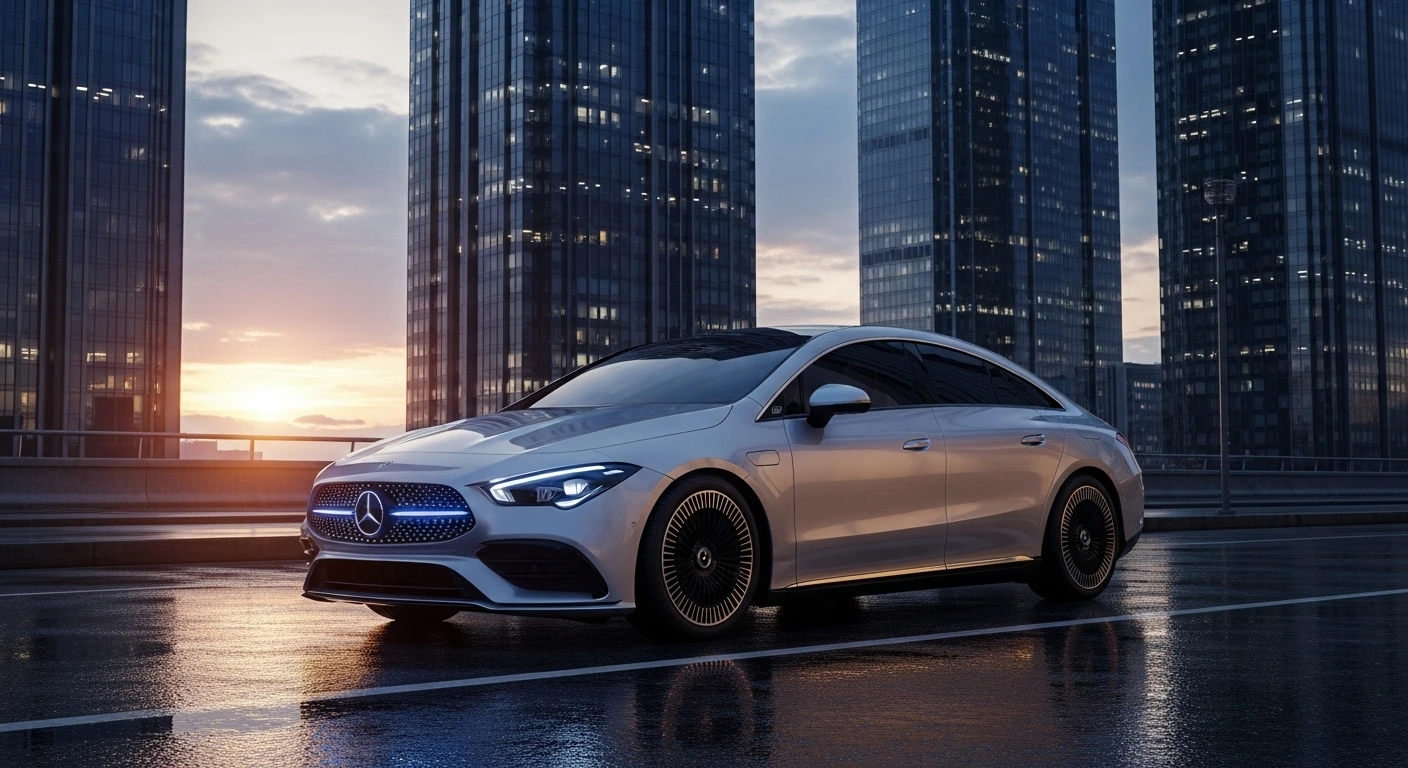
The Mercedes-Benz compact sedan has always sat in a tricky spot in the U.S. market: too premium to compete on price, too small to dominate. For 2026, Mercedes is rewriting that narrative by launching the CLA with EQ Technology — a fully electric first, hybrid later strategy. This change matters now because the EV wars are heating up, buyers demand tech and range, and legacy automakers need a strong answer.
With gas prices fluctuating and electric incentives shifting, U.S. customers are hunting for EVs that blend everyday usability, brand prestige, and technology. Mercedes’ move to embed EQ tech into its mainstream lineup signals that even its “entry” models must be future-ready. If the new CLA hits its goals, Mercedes could steal some thunder from Tesla, BMW, and the rest of the premium EV crowd.
What Mercedes Revealed & What’s New
Mercedes recently unveiled the 2026 CLA Sedan with EQ Technology for the U.S. market. The U.S. portfolio will include two EV variants at launch:
- CLA 250+ with EQ Technology (rear-wheel drive)
- CLA 350 4MATIC with EQ Technology (all-wheel drive)
Mercedes is also planning hybrid versions later on. The EV sedan is built on the new MMA platform, which allows combustion and electric versions to share exterior and interior design.
Standout features include:
- 800-volt architecture supporting fast charging up to 320 kW.
- Dual-motor & single-motor options, with two-speed transmission on the rear-drive version.
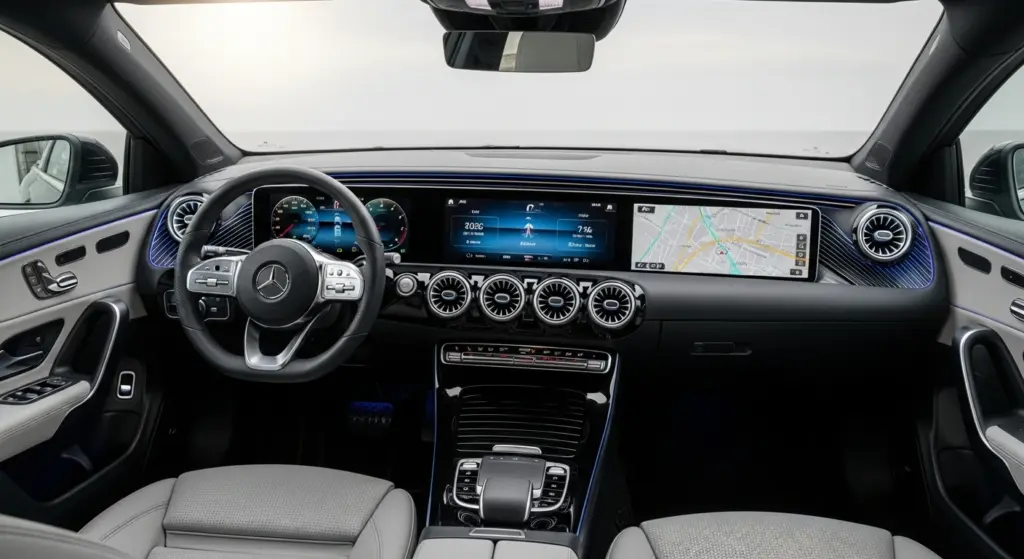
- A full-width Superscreen display setup and next-gen MBUX / MB.OS with AI integration from Google and Microsoft.
Mercedes also addressed U.S.-specific charging flexibility: the U.S. model will include a 400V-to-800V converter, enabling use of more DC fast charging stations, albeit at lower speeds compared to pure 800V stalls.
Key Specs & What They Mean
| Spec / Feature | CLA 250+ (RWD) | CLA 350 4MATIC | Real-World Implication |
|---|---|---|---|
| Power | 268 hp | 349 hp | Sufficient for daily driving; AWD adds traction |
| Torque | 247 lb-ft | 380 lb-ft | Strong midrange pull for merges and passes |
| 0–60 mph | ~6.6 s | ~4.8 s | 350 is brisk; 250+ is balanced performance |
| Battery | 85 kWh (usable) | Same | Solid capacity for compact class |
| Fast Charging | Up to 320 kW (10–80% in 22 min estimated) | Same | Rapid top-ups at compatible stations |
| Top Speed | ~130 mph (limited) | Same | Enough for highway use |
| Platform | MMA (shared ICE / EV design) | MMA | Design cohesion; production flexibility |
| Price & Launch | Coming late 2025 in U.S. | Same | Buyers may wait for U.S. pricing |
Also take a look at this topic: Moto Morini’s Calibro 700 Bagger Is America’s Next Affordable Touring Star
What this means in real life:
- The CLA 250+ gives you efficient EV performance with predictable handling and range — ideal for daily commuting and highway stretches.
- The 350 4MATIC is the sporty option, better for performance enthusiasts or those in cold/low-grip locations.
- Fast charging at up to 320 kW means you could theoretically add ~200 miles in ~10 minutes at compatible hubs.
- The converter for 400V compatibility broadens charger access — important in U.S. markets where full 800V coverage is thin.
How the New CLA Stacks Up
Versus Prior CLA Generations
This generation marks a major pivot: previous CLAs were internal combustion or hybrids. Now the model is electric-first, hybrid second. The design continuity between electric and ICE versions ends Mercedes’ previous split-EQ styling strategy.
Versus Competitors
The electric CLA targets rivals like Tesla Model 3, BMW i4, and Polestar 2. The Superscreen, AI-infused MBUX, and 800V architecture aim to push it above many peers. The hybrid options may also appeal to buyers who can’t go fully electric yet.
Watching Mercedes’ EV Strategy
Recently, Mercedes announced steep price cuts across its EQ models and a pause on U.S. production of many EQ sedans and SUVs, reportedly tied to ending the federal EV tax credit. The CLA EV lineup remains in the pipeline — but how this broader strategy affects pricing, incentives, or model support in the U.S. is a big variable.
Also take a look at this topic: Audi Drops the Four-Cylinder: 2026 A6 Becomes All-V6 in U.S
Trends, Risks & What’s Next
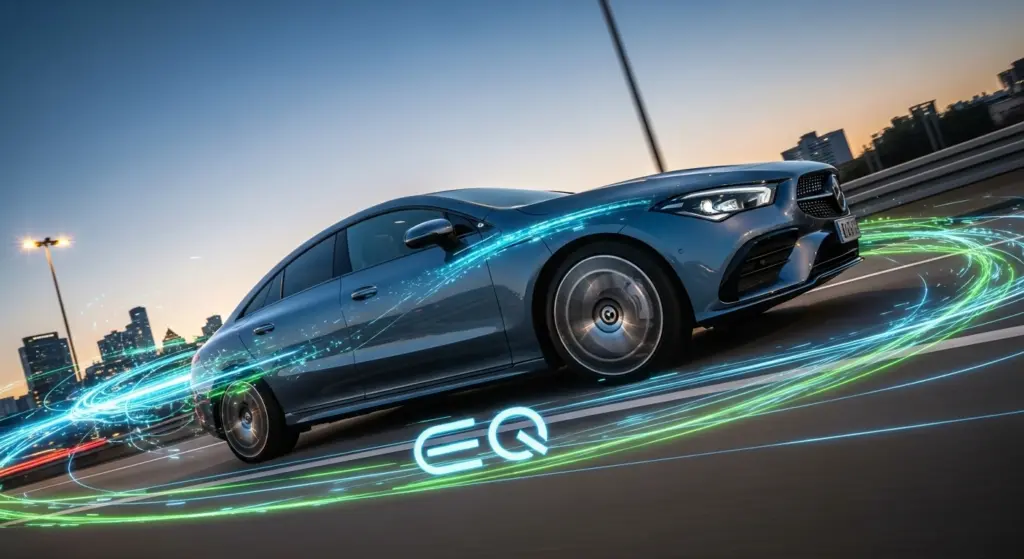
- Charging infrastructure reality check: Even with 320 kW capability, many U.S. fast chargers top out at lower power. The 400V compatibility converter helps but might limit top-end speed.
- Pricing & incentive sensitivity: With federal credits ending or shifting, much of the CLA’s appeal will depend on net pricing and lease deals.
- Software & OTA support pressure: As vehicles become more software-defined, Mercedes must deliver flawless OTA updates, bug fixes, and UX refinement.
- Public perception & brand clarity: Mercedes is retiring “EQ-only” styling in favor of unified design across EVs and ICEs. That may help reduce visual confusion but raises expectations that Mercedes’ EVs actually feel premium and intentional.
- Shooting Brake variant and wagon fans: Mercedes has already launched the CLA Shooting Brake EV in Europe — though U.S. availability is uncertain.
Conclusion
The new Mercedes CLA with EQ Technology represents a bold leap for Mercedes in the compact sedan / EV space. With 800V architecture, AI-driven MBUX, and both rear-wheel and all-wheel drive variants, it’s positioning itself as a tech-forward, luxury EV option.
Yet challenges remain: pricing, charger compatibility, EV incentives, and Mercedes’ broader EV strategy will shape its success. For buyers wanting prestige, future-readiness, and compact luxury EV cred, the CLA 250+ is likely the sweet spot. For those wanting maximum performance and AWD grip, the CLA 350 4MATIC offers that edge — at a premium.